
This web magazine proposes new ways to enjoy kogei.
Through interviews with creators, artists and people who live in Hokuriku,
discover the allure of Kogei from various angles.
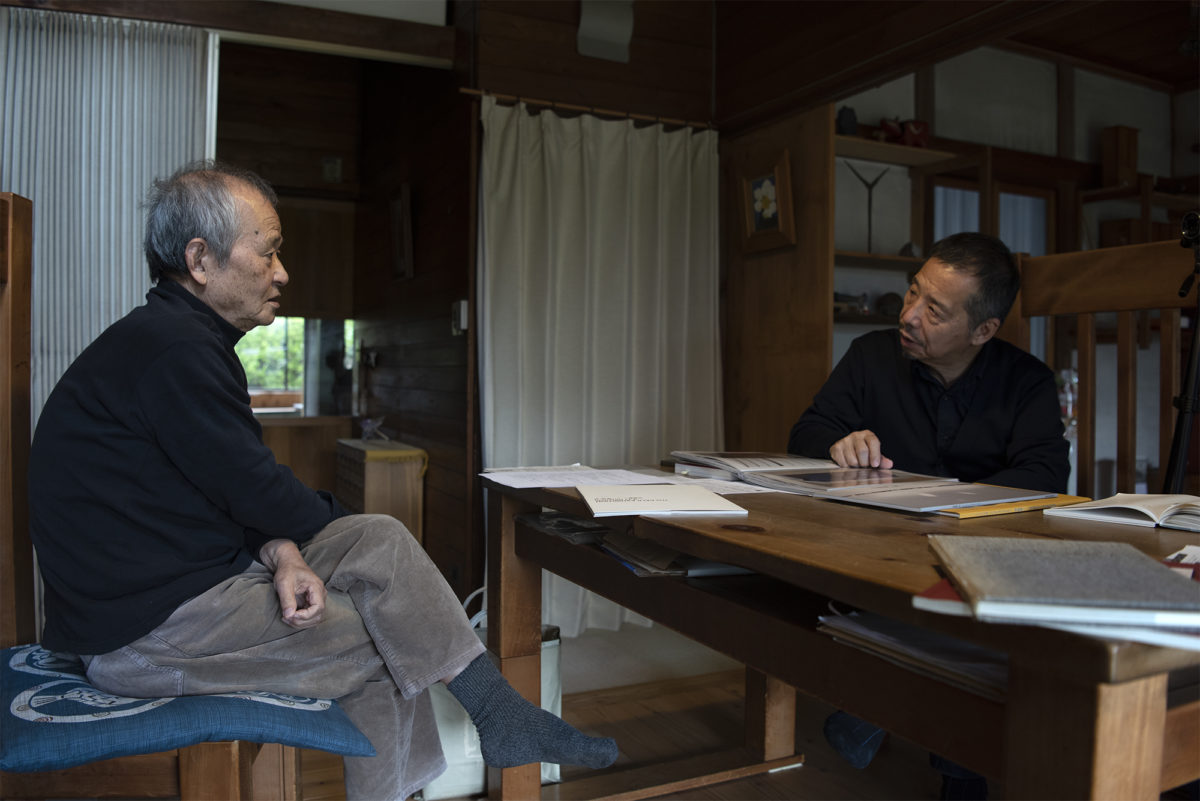
Due to the COVID-19 pandemic, “Go for Kogei” decided to postpone the originally planned exhibitions. However, this did provide an opportunity for Yuji Akimoto, the previously scheduled exhibition’s supervisor, to privately visit the artists. The first of these is Keiji Ito, a ceramic artist, and one whom Akimoto honors in saying, “I feel a unique stance in his work.” Between “art” and “craft,” what defines whether something is the latter? We visited Ito’s home in the city of Toki, Gifu Prefecture, to listen to the pair’s discussion.
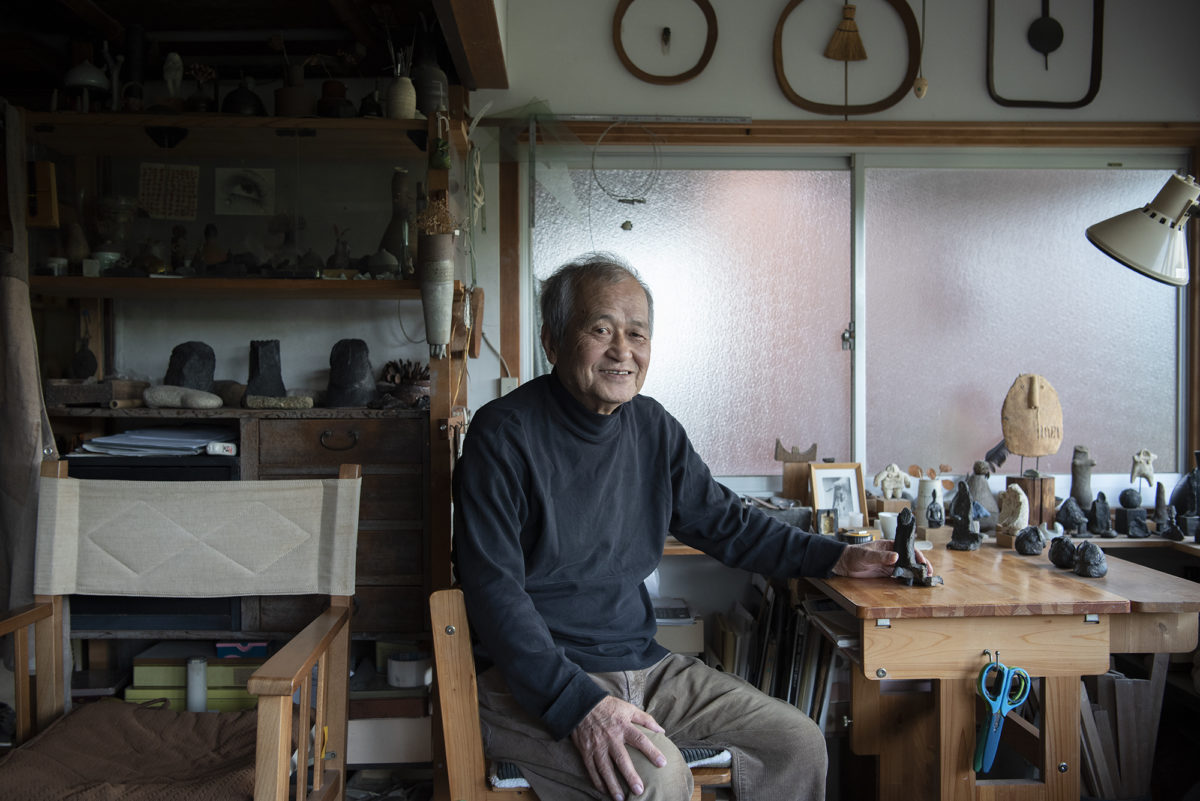
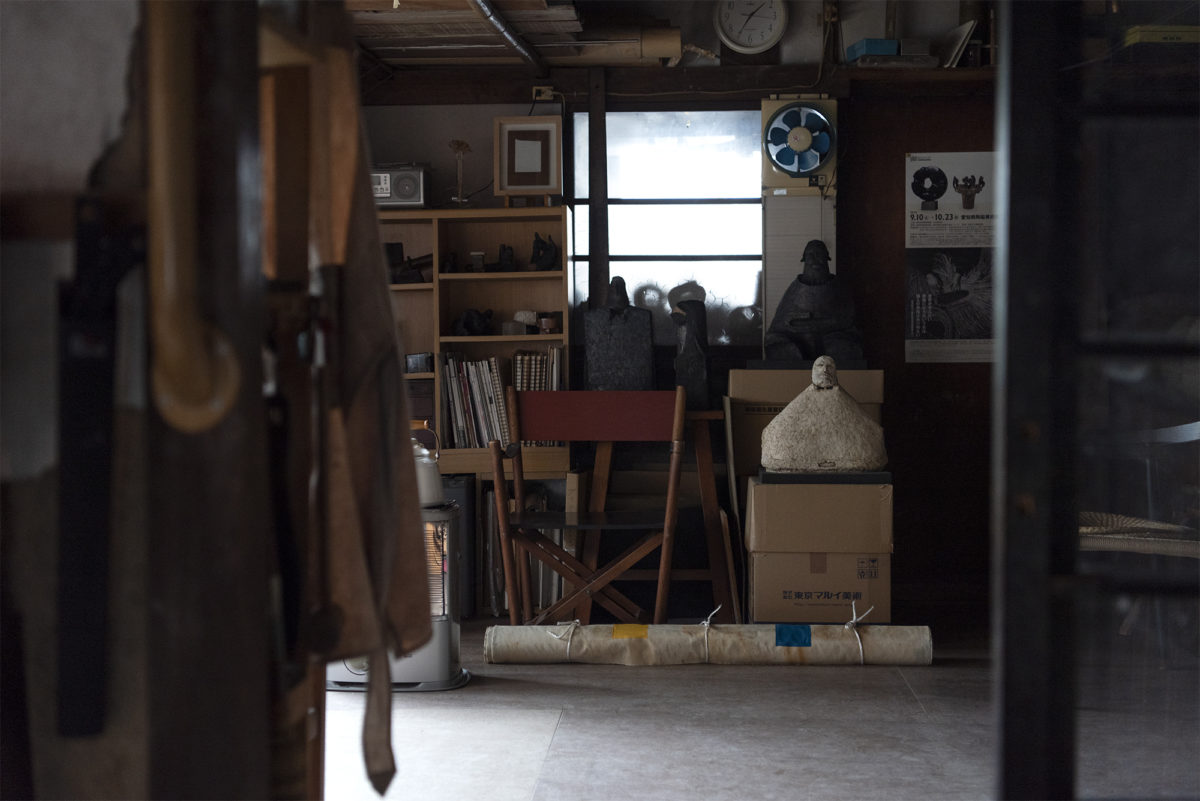
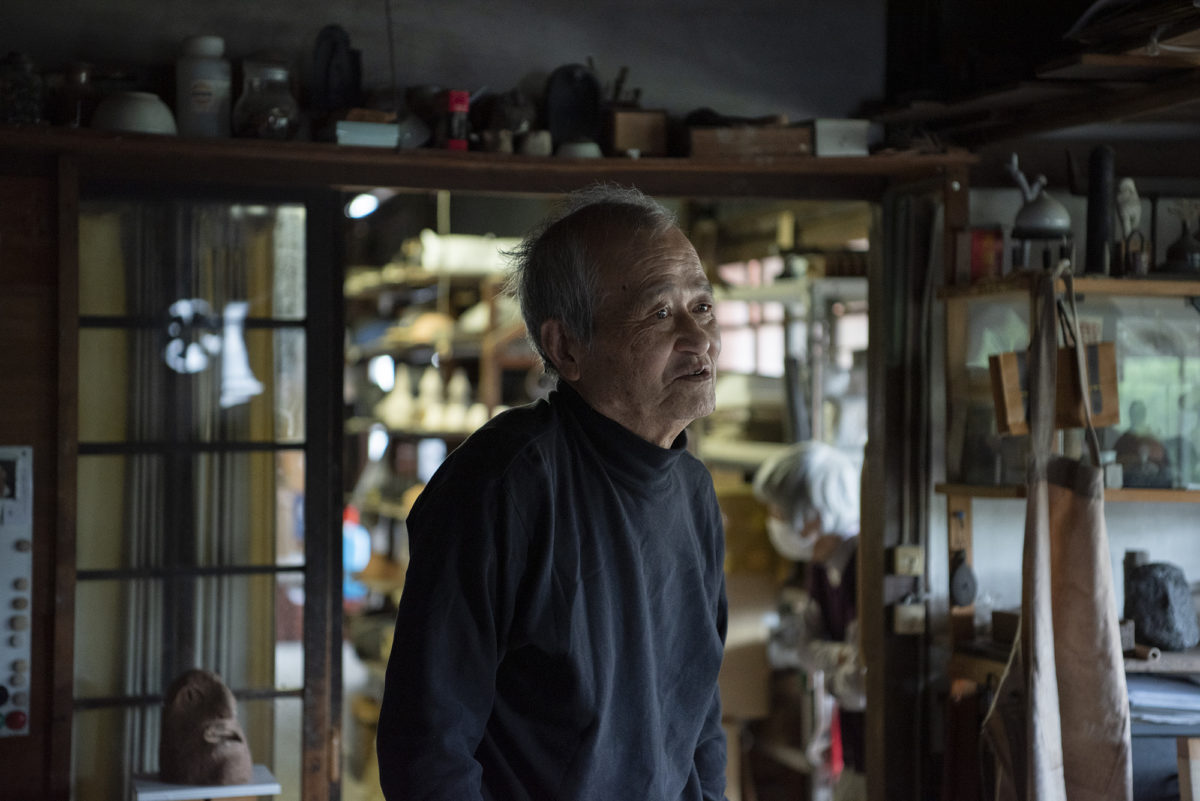
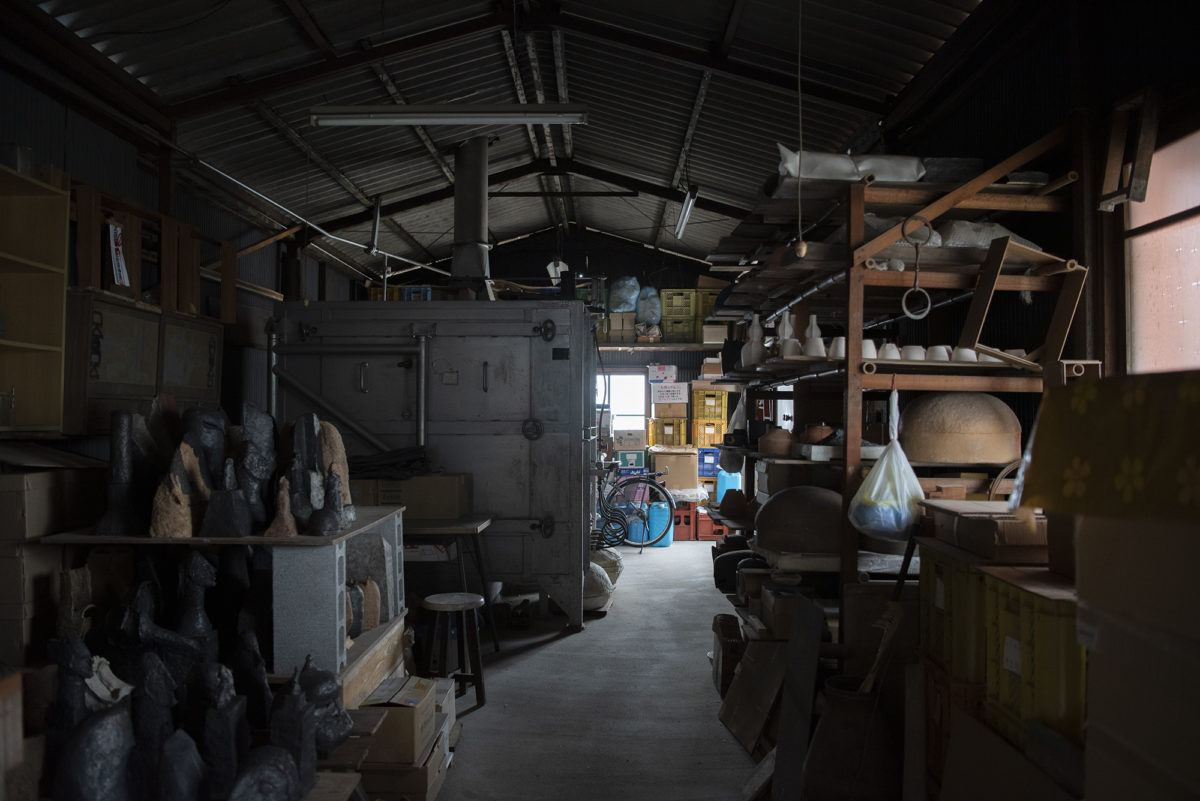
Keiji Ito, at the workshop adjacent to his home.
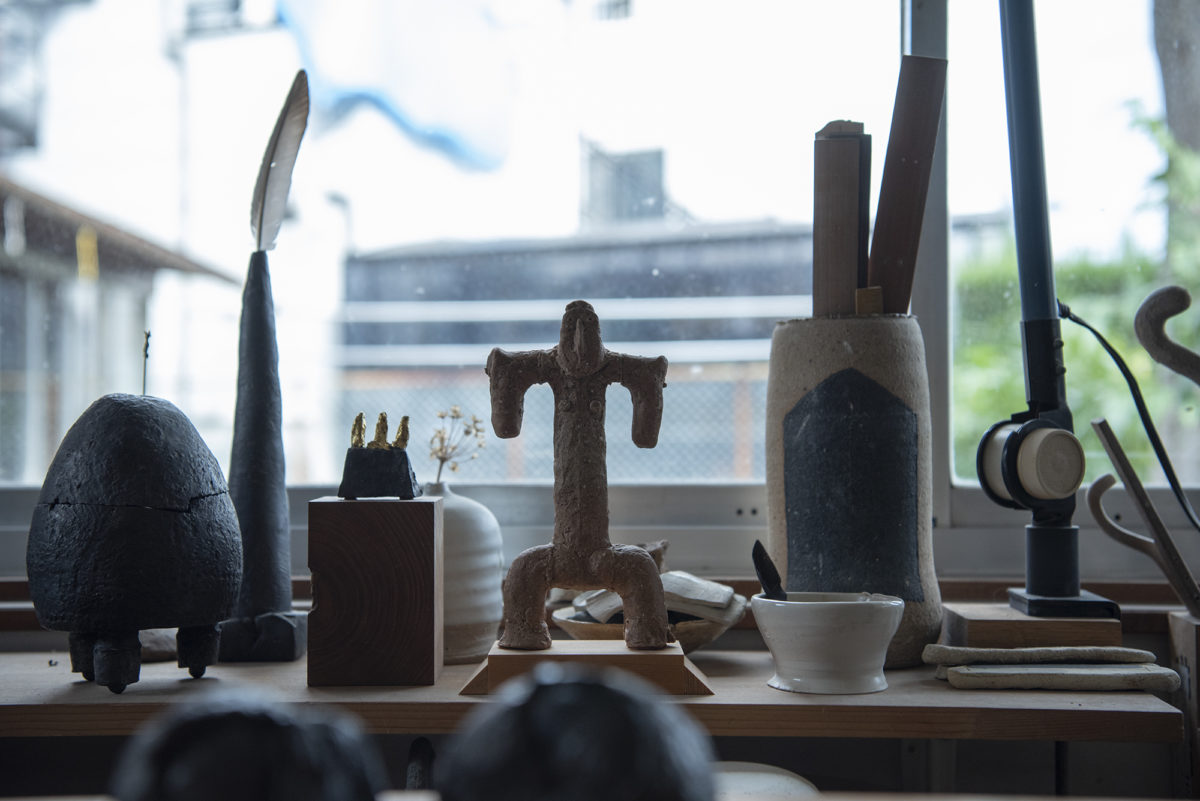
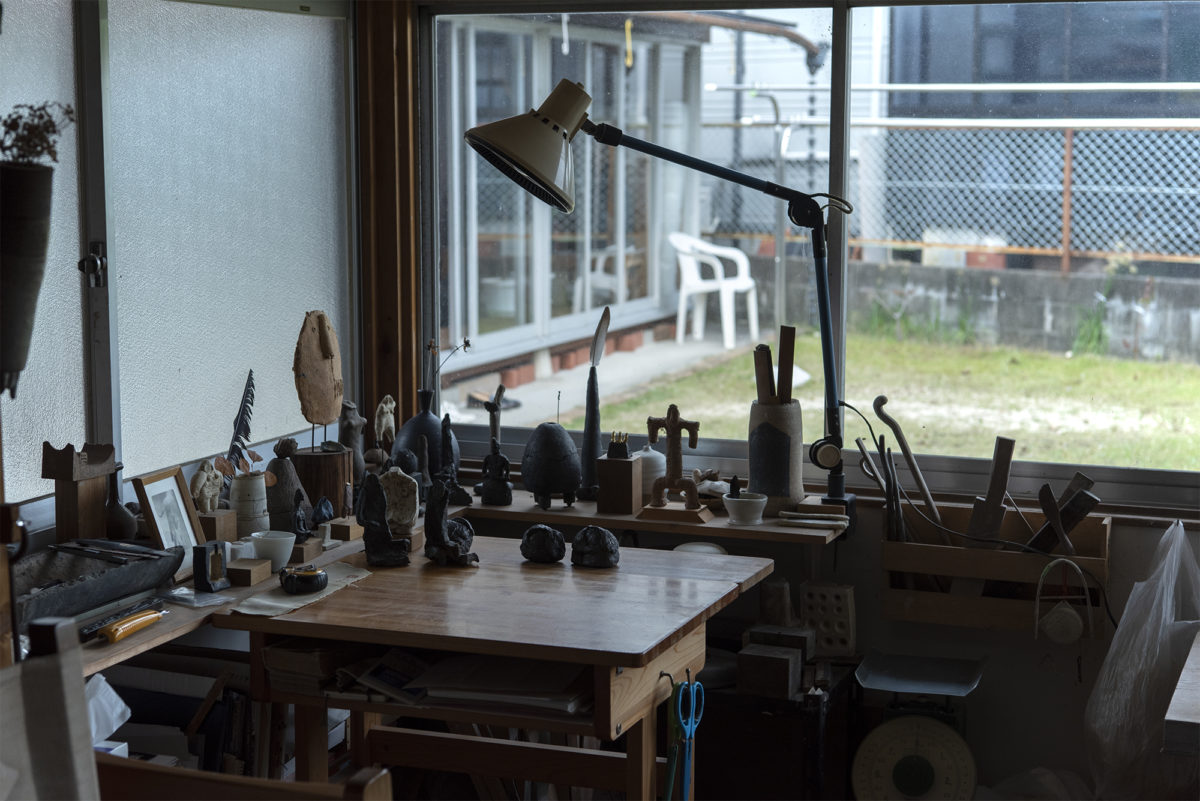
Things that Ito has collected over the years are lined up about his work desk.
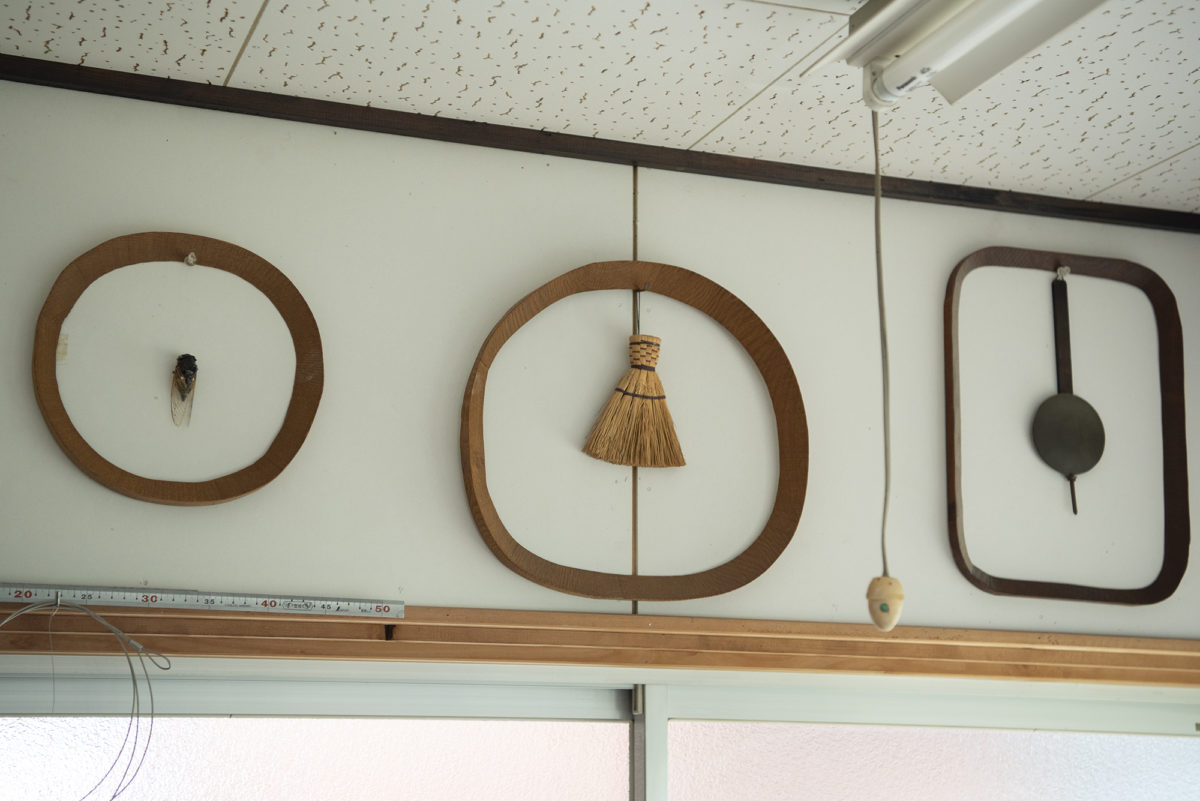
Akimoto: I apologize for the inconvenience and thank you for your cooperation today. You have a lovely home. I can see your touch everywhere, sense how you live.
Ito: It’s just an old Japanese-style house. But it’s unusual for the balcony landing at the top of the living room stairs. It reminds me of the architecture of Kiyoshi Seike*.
* Kiyoshi Seiki (1918 – 2005) was an architect who combined western architecture with traditional
Japanese aesthetics. He is considered to be one of the greatest contributors to modern residential
construction.
Akimoto: Ah, yes. Seiki has a unique approach to architecture. It’s like modern architecture, but with a Japanese flair.
Ito: I don’t think I’m the kind of person who can live in a “typical” abode, like an apartment. I’d feel cramped so fast! [Laughter.]
Akimoto: Need room to breathe?
Ito: Modern buildings don’t have a sense of texture or weight. You never seen an earthen wall, and if there is a sense of weight, it’s concrete. Isn’t it wearisome?
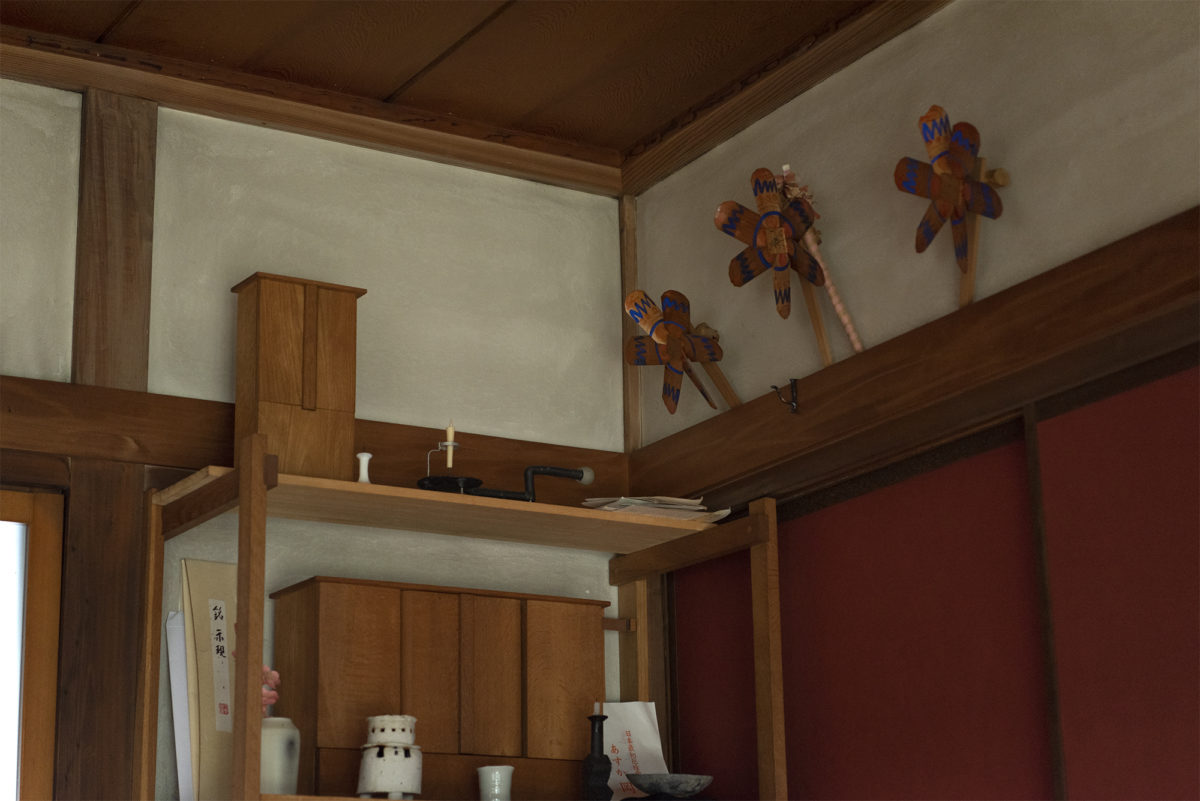
The Japanese-style house was built by a local carpenter.
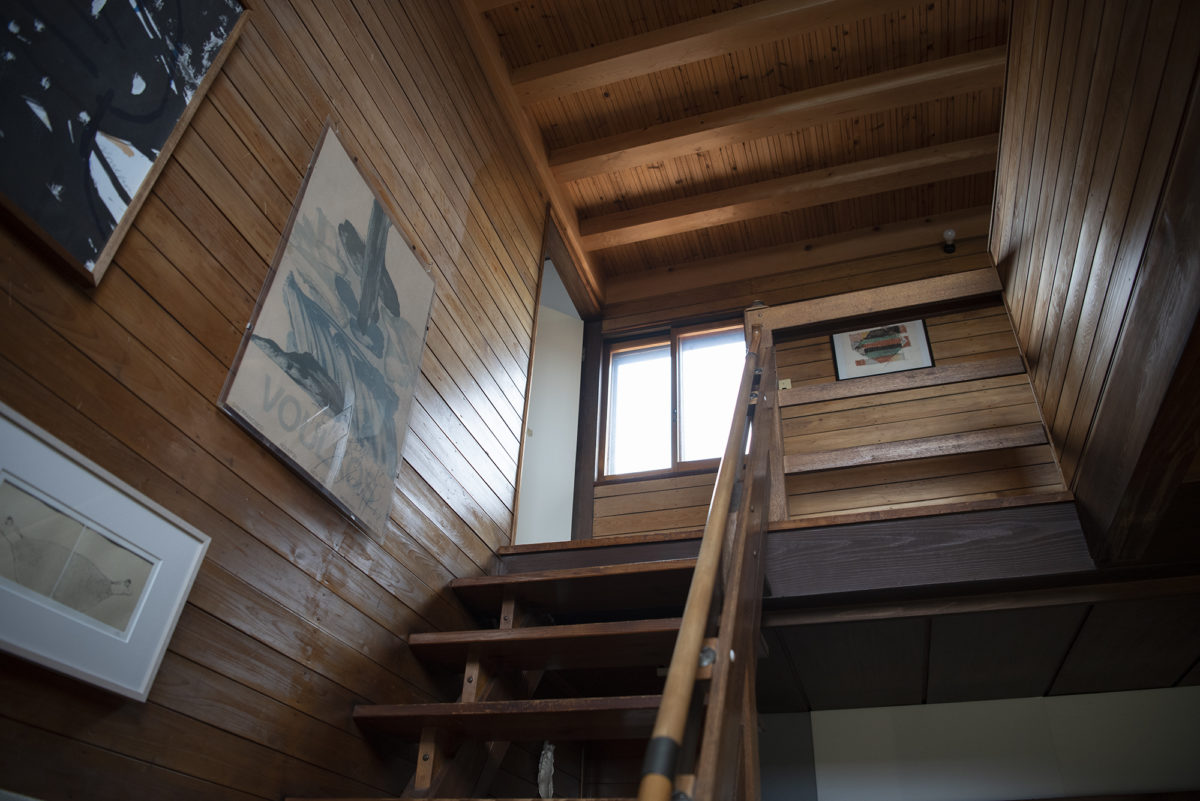
Stairs leading up to a balcony landing with a guard, a rarity in Japanese-style houses.
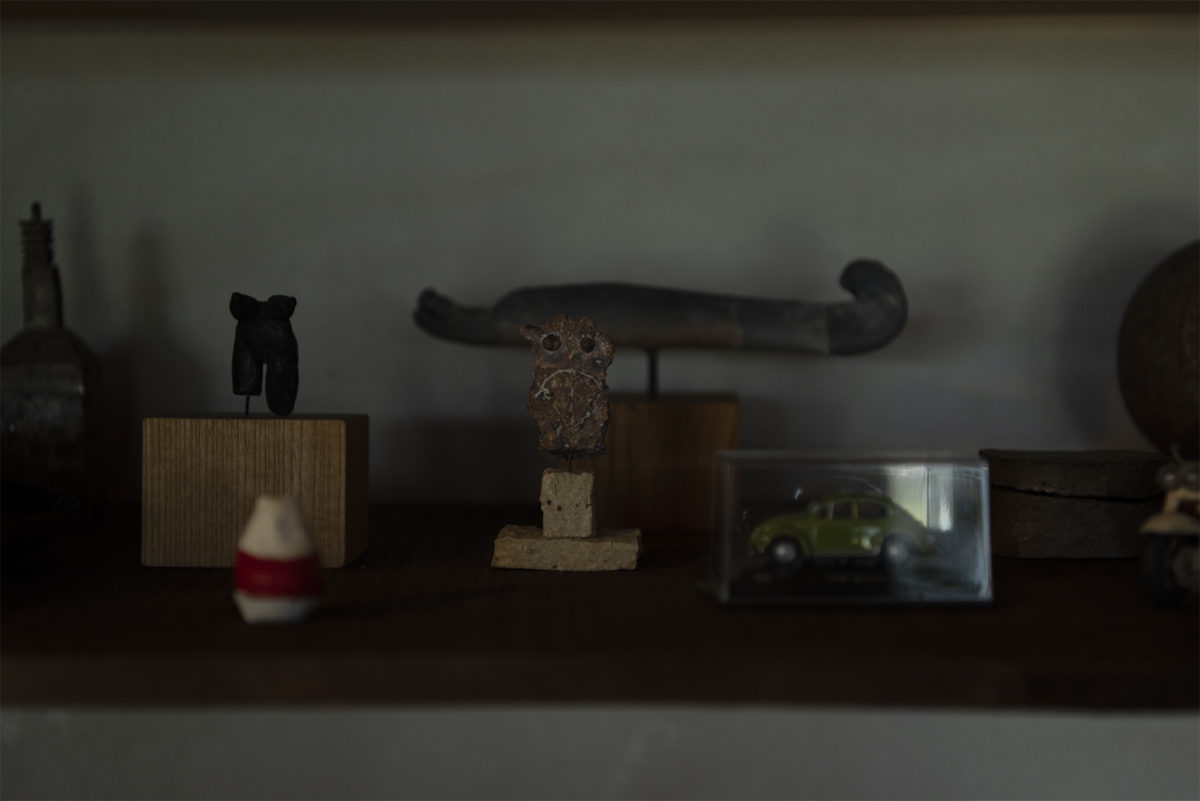
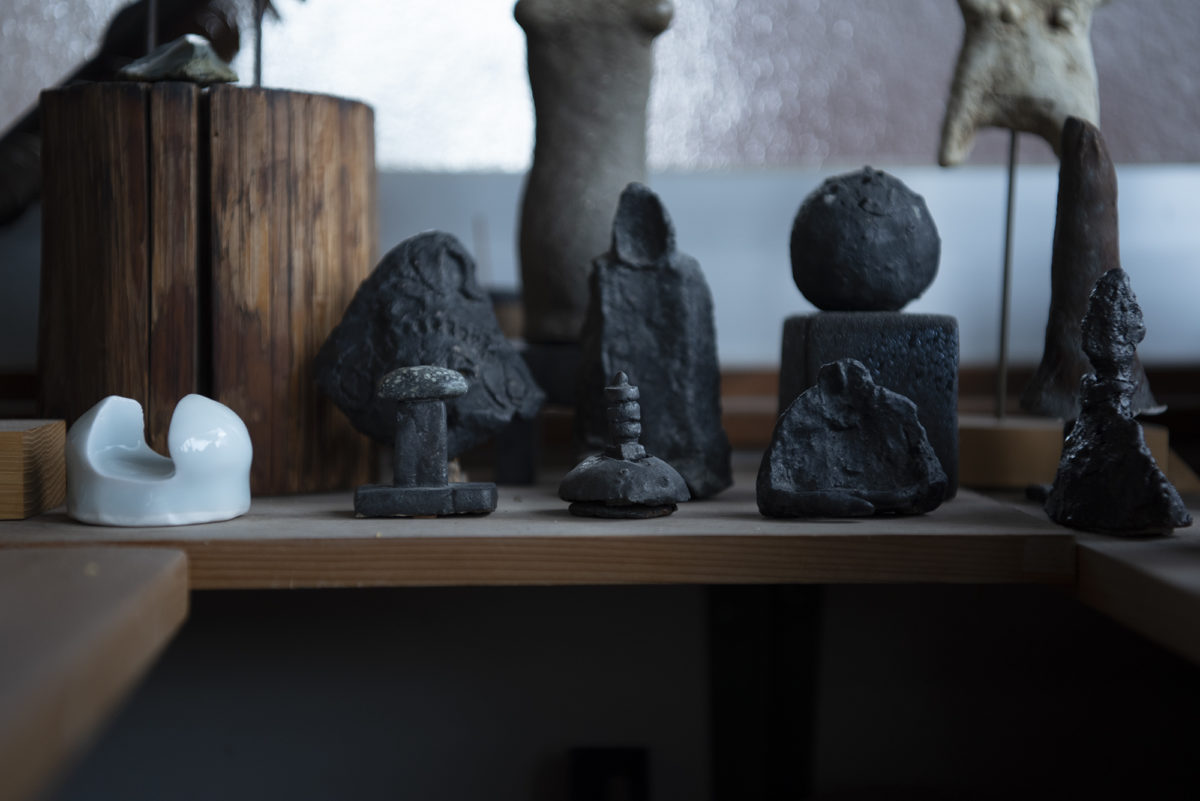
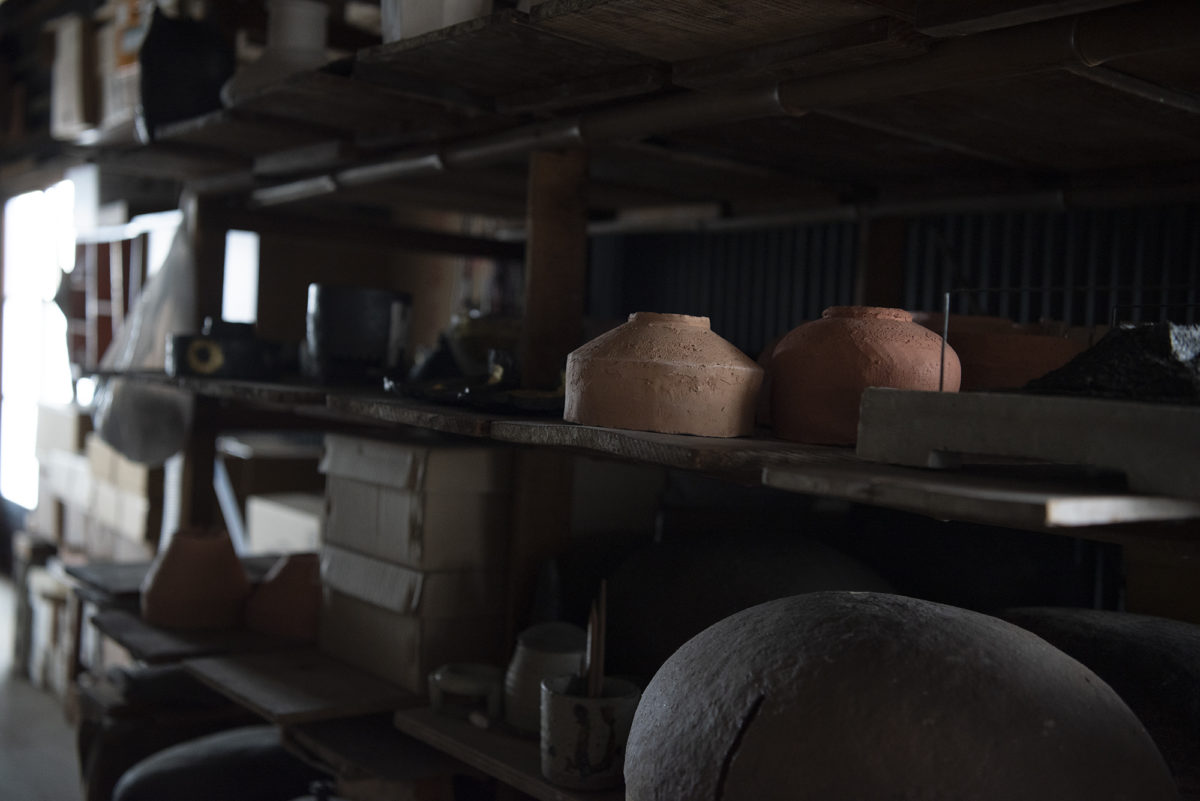
Ito’s collection, displayed on a shelf.
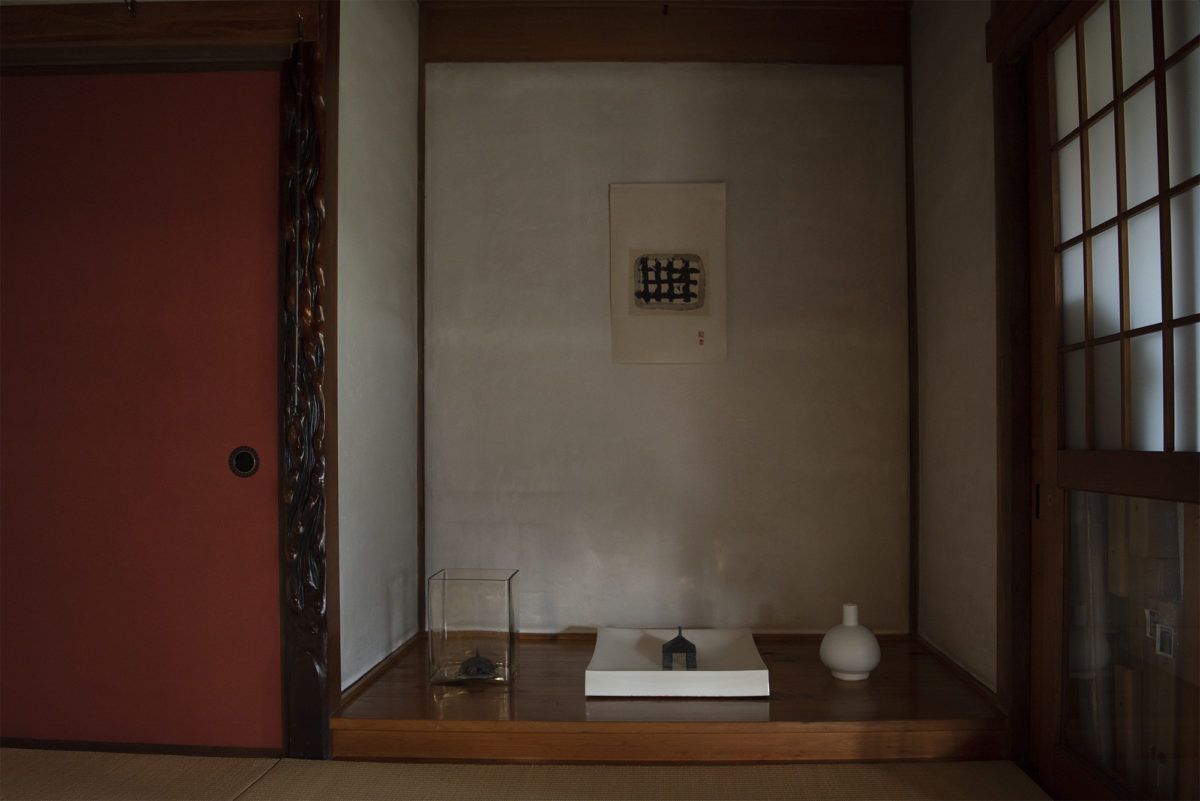
The alcove.
Akimoto: So, I was hoping we could rethink the question of “What is kogei, [traditional Japanese craft]?” This is in part why I’d invited you to participate in the exhibition we’d originally planned. But I don’t want to turn this into some academic treatise; I want to approach it more conversationally.
So first, take me through your own chronology. You studied painting at an art school, is that correct? You’re currently a ceramic artist, but you had a desire to paint other media at that time?
Ito: Oh, no, I wasn’t thinking of becoming a painter, necessarily. I simply loved painting. I chose Musashino Art University because a favorite painter of mine, Yoshio Mori*, was a professor there.
* Yoshi Mori (1908 – 1997) is a western-style painter [imported oil and watercolor styles] who was
active in the Showa and Heisei periods. He taught young artists at the Tokyo University of the Arts
at Musashino Art University.
Akimoto: Ah, is that right? So, rather than going to art school as a general student, you sought out mentors like Yoshio Mori and Saburo Aso. How did you get such a clear direction at that age?
Ito: Somehow or another. I’m actually not sure. The area around here [Toki and Tajimi] is a kind of mecca for potters, so even the high school had special departments for ceramics and design courses. With those kinds of surroundings, many of the teachers were also Nitten[*] artists, but the teacher who was the custodian of my painting club belonged to the Nikikai*. I feel fortunate to have had a teacher outside of the official exhibition organization oversee me, because it broadened my horizons.
[* The Nitten, a shortening of the Japanese term for the Japan Fine Arts Exhibition, is the largest official arts organization in Japan.]
* The Nikikai is an associated organization hosting an open-call “Niki Exhibition” and which advocates for a rejecting the value placed in the categorization of art schools by “old,” “new,” or other typologies of appearance.
Akimoto: So, after graduating from university, you moved back to Gifu and joined the design office of the Gifu Prefectural Ceramics Research Institute. Did you join as a pottery designer?
Ito: Yes, that’s right. When I joined the Ceramics Research Institute, I met [pottery master] Sakuzo Hineno, who was working there part-time, and that was the first time I was able to really grasp the possibilities of free expression and diversity in pottery.
Akimoto: How did Hineno influence you at that time?
Ito: As a master craftsman, he emphasized “the work of one’s hands” as opposed to “the work of one’s head.” He would say, “It’s edifying to make a few things, and to make them by hand.” We also made crafts for daily use, so I started by making my own dishes and eating from them. What I made and my own tableware began to change.
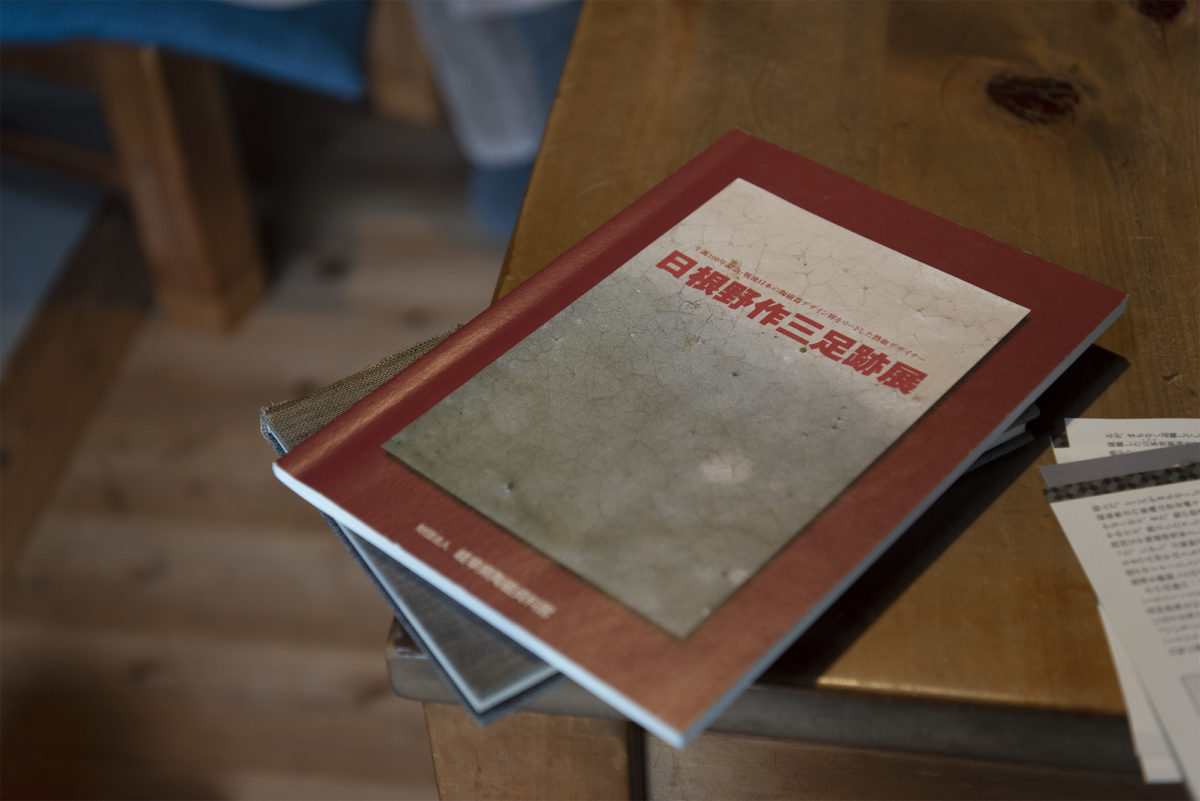
Sakuzo Hineno is a leading pottery artist of postwar Japan. “80% of Japanese ceramic designs were made by Hineno,” notes Shoji Hamada [another pottery master and National Living Treasure], with praise.
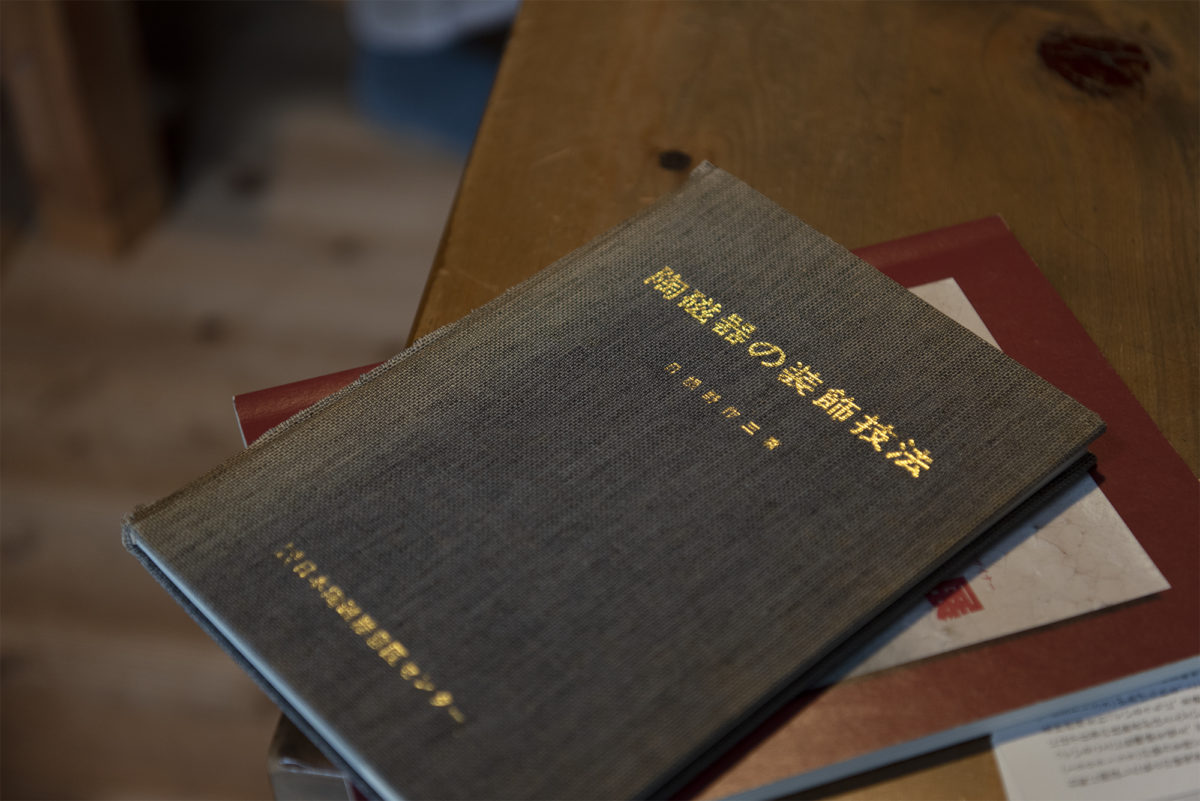
More reading material related to Hineno.
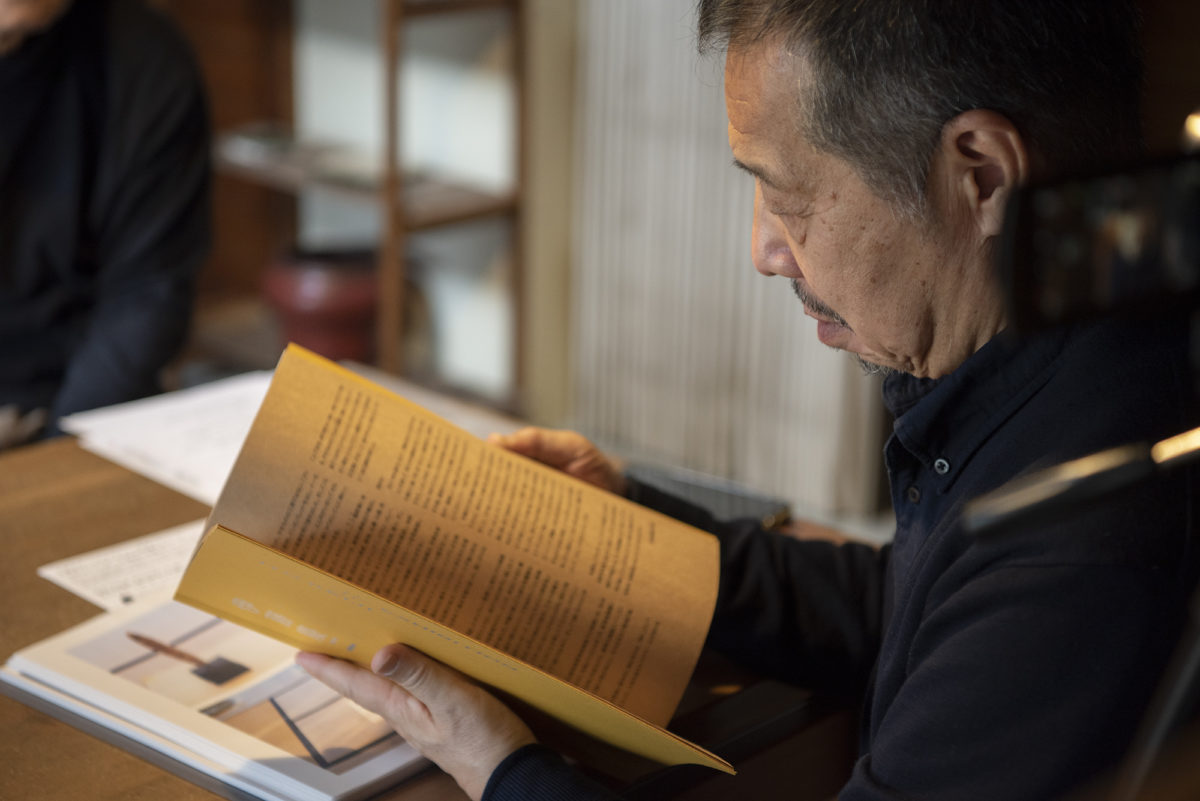
Akimoto: You worked at the Ceramics Research Institute was more of a desk job, so how did you come around to making your own pottery?
Ito: I was designing ceramics, but I felt it was difficult to communicate with the crafters. The design on paper wasn’t translating to the three-dimensional work. I thought, if I could do it myself, I could make it take shape.
Akimoto: So then, the contradiction between what was on paper and the resulting piece could be resolved if you made it yourself. [Akimoto reads through some of the material on Hineno.] I wonder, by the by, how this kind of work disappeared. Like, the “designer” who provides designs for the crafters. It seems like there was originally something in those very early stages, something between the “design” and the “craftsmanship.”
Ito: I think it’s because the word “craft” [in the Japanese vernacular] is becoming obsolete. In Scandinavia, crafts are still a part of everyday life. However, in Japan, the concept of “craft” [that is, kogei] is dominated by the traditional crafts. I wonder how much craft has become neglected.
Akimoto: Then, could there be a word to replace “craft” now?
Ito: I don’t think so. Imagine a family of five. That family probably doesn’t keep a set of five rice bowls and five matching cups. We just don’t live in a way that requires that anymore. A lot of people are eating their meals at convenience stores and the like nowadays. I think it can be said that the way to enjoy life, the attitude of appreciating life, is disappearing.

Akimoto: Our environment has become more inhumane, hasn’t it? It’s not so much that “craft” is disappearing as “life.”
Ito: Yes. Life is disappearing, and craft with it.
Akimoto: You joined the Japan Designer Craftsman Association* in 1963, and you’ve been mainly sticking to public exhibitions around this area since then. Every day I check international ceramic art exhibitions, and they lean heavily into “art.” The aura they give off is quite far from “craft” as you spoke about earlier. Do you feel both both aspects can coexist?
* The Japan Designer Craftsman Association (now called the Japan Craft Design Association), was
founded in 1956 by Mosuke Yoshitake, and others.
Ito: Yes. There is function, and there is also form. I’ve kept an awareness of both.
Akimoto: Rather than deny one or the other, you maintain both?
Ito: That’s right.
Akimoto: I think that’s what’s unique to you. People often debate whether kogei is utilitarian or aesthetic. How do you balance the two in your mind?
Ito: Hm, “how?” I think you can use the clay to freely express yourself while creating a piece of pottery. For me, it feels like the paintings I created on campus when I was younger have turned into the clay. I don’t feel there’s such a big difference there.
Akimoto: But when you’re making a utensil, there’s a certain objectivity that you have to consider, like in how it will actually function. Isn’t it difficult to both adhere to that and have “free expression”?
Ito: How do you mean? They can be balanced, no?
Akimoto: In other works, do you draw out expressiveness from a functional piece of pottery, or do you draw functionality out of an already expressive piece? Do you mean that you create both aspects in unison? It’s a marvelous thing, but how does it come together?
Ito: Since I was in my 40s, I’ve perceived the lines of art and everyday crafts as clearly separated, but it’s not like this [holding his hands in the shape of a Y], but side by side, in parallel. That’s how I feel. I don’t have a definitive feeling of how it ought to be.
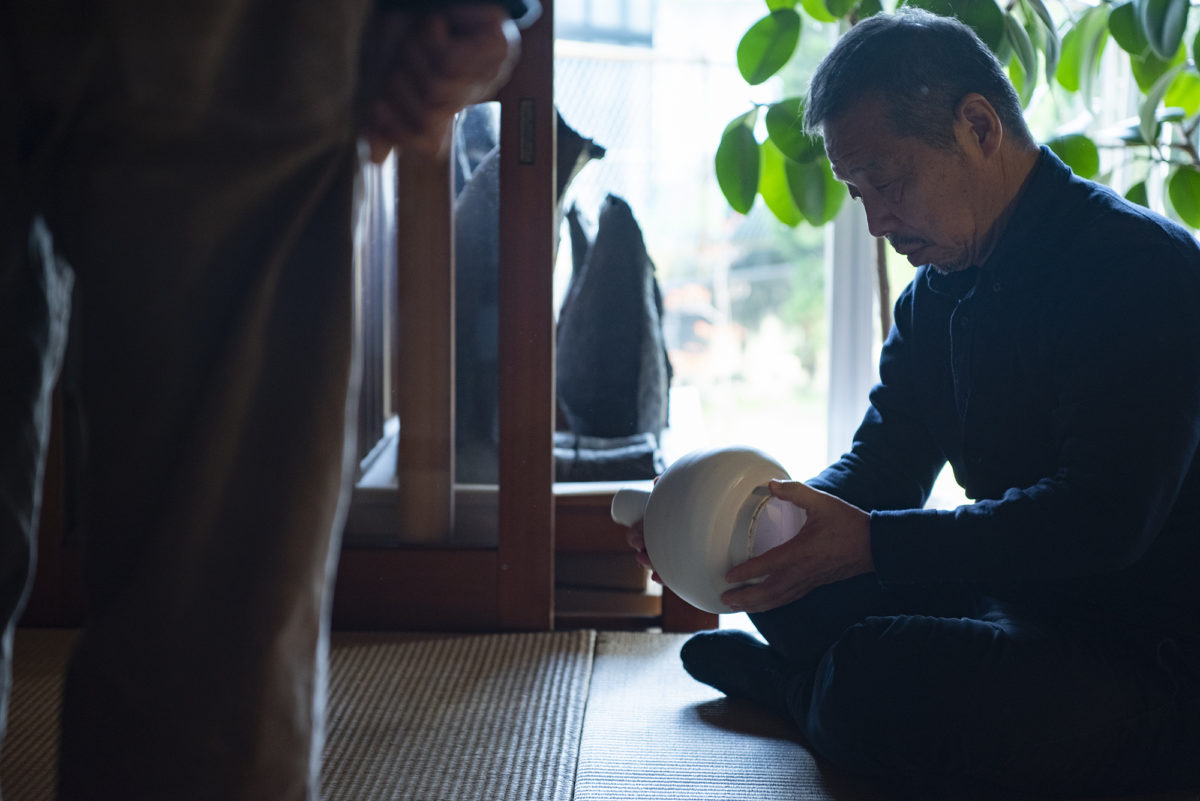
Looking over Ito’s vase displayed in the alcove. It’s uniquely made, with the body spun on the potter’s wheel.
Akimoto: For example, what is the difference in the thinking behind the making of a piece of pottery and the creation of a sculptural work?
Ito: Naturally, [the pottery craft] has a purpose it’s made to fulfill. It can be as simple as holding flowers, but it doesn’t have to do so in the moment. Just that it’s important there be an opening where flowers could be placed. Without that opening, it lacks functionality. On the other hand, even something completely flat could satisfy a use by attaching a handle.
Akimoto: I see. So, you may know, my background is in contemporary art, and I’m trying to reconcile what you’ve just said about utensils versus art works.
In the field of kogei, of traditional Japanese craft, there was a time when avant-garde artists rejected functionality in favor of conceptual approaches. Yet, looking at your work, I feel there’s a “craft-centric” stance. And the “purpose” you mentioned earlier is much more forgiving than most would assume.
Ito: I don’t think there’s anything that dictates how something “must” be used. Even a dinner plate is a saucer when used that way.
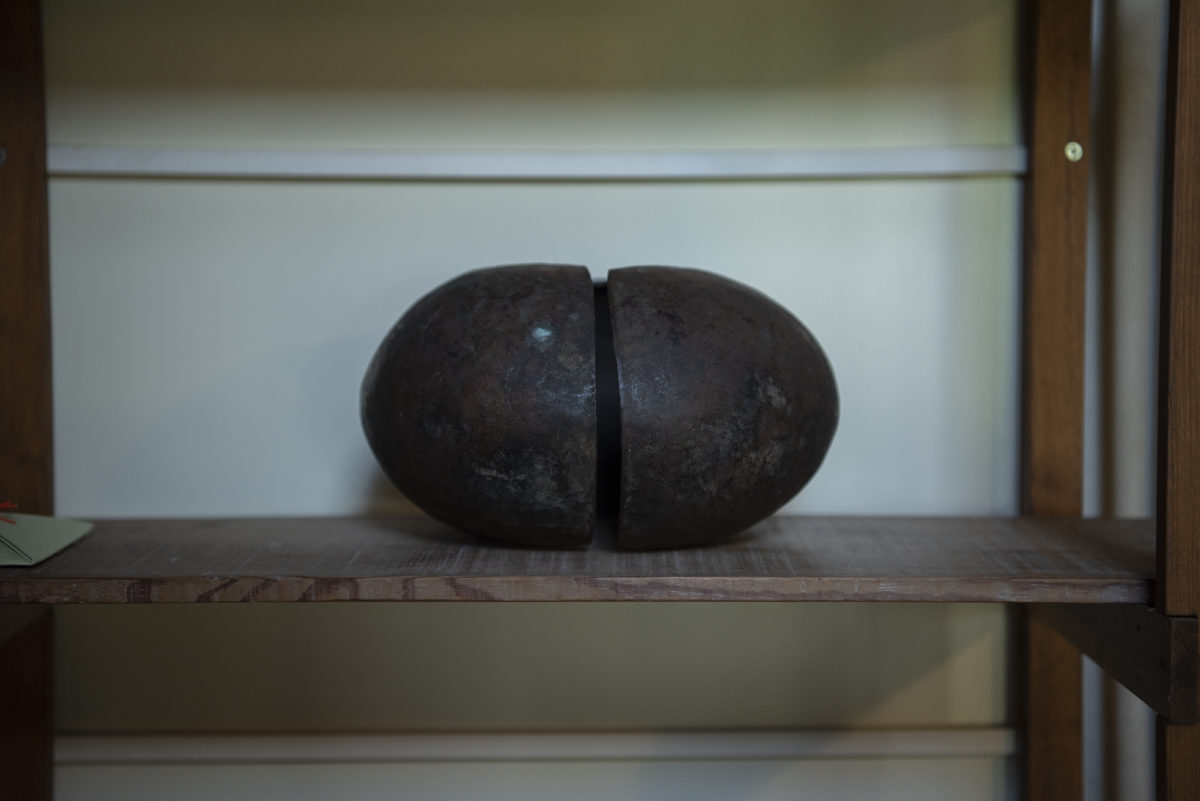
Purchased at “Mon Sakata.” Originally from Africa, it would be placed on the feet with a ball inside, producing sound while the wearer danced. It’s exhibited like an objet d’art.
Akimoto: So, you see no conflict between objects that are more unusual because of their artistic expression and ordinary objects for everyday use, then? I would think ordinary objects are more conservative in nature, following long-held patterns that repeat in many places, but you see no conflict with these patterns?
Ito: Not really, no. I think many things come quite close to being art, even if they are functional. Even a bowl may become art when covered with a lid, for example. I don’t really think about such classifications, though.
Akimoto: That’s an interesting point though, isn’t it? When I’m working with contemporary art, I sometimes feel that the ordinary seems to be a stumbling block. It’s easy to slip into the idea that creativity is breaking or denying the ordinary. If we talking about the dynamism in such creation, ordinary objects and works of art become incompatible. But that’s not the case with you. That’s what I find fascinating.
Ito: Is it? I think it can’t be explained conceptually as just “it is because it is.”
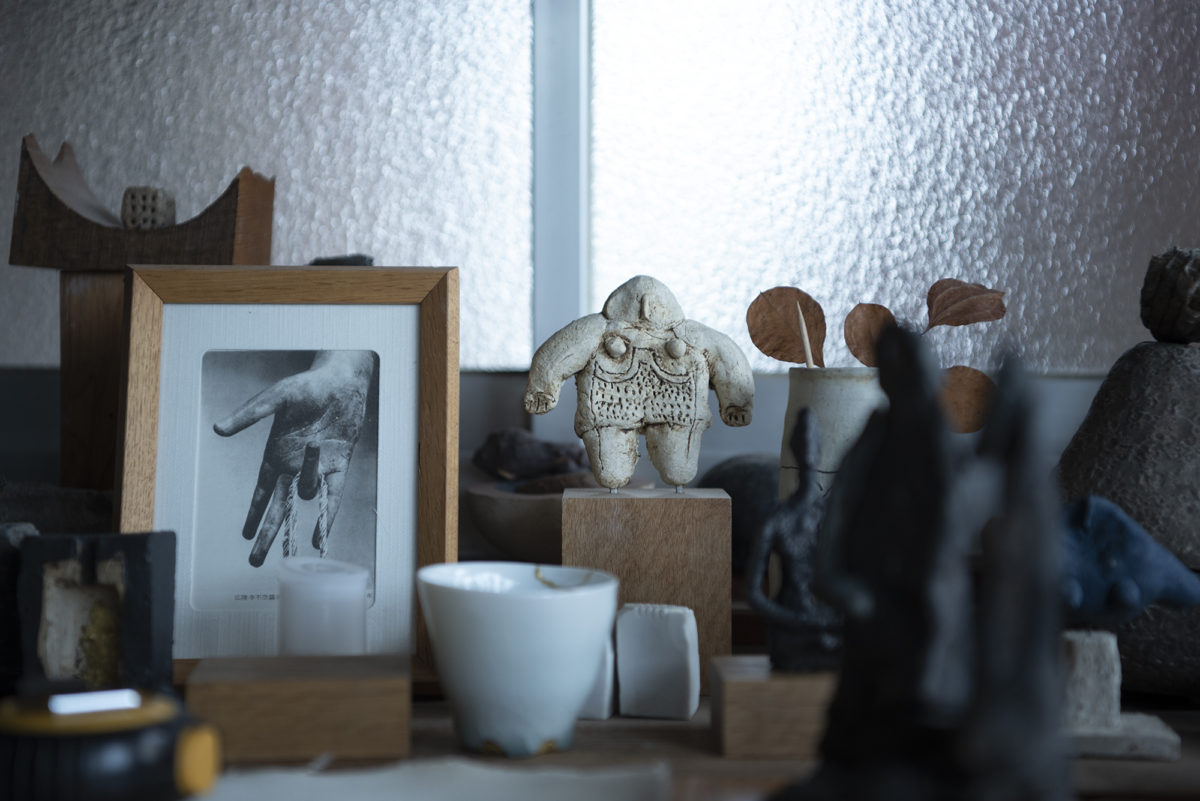
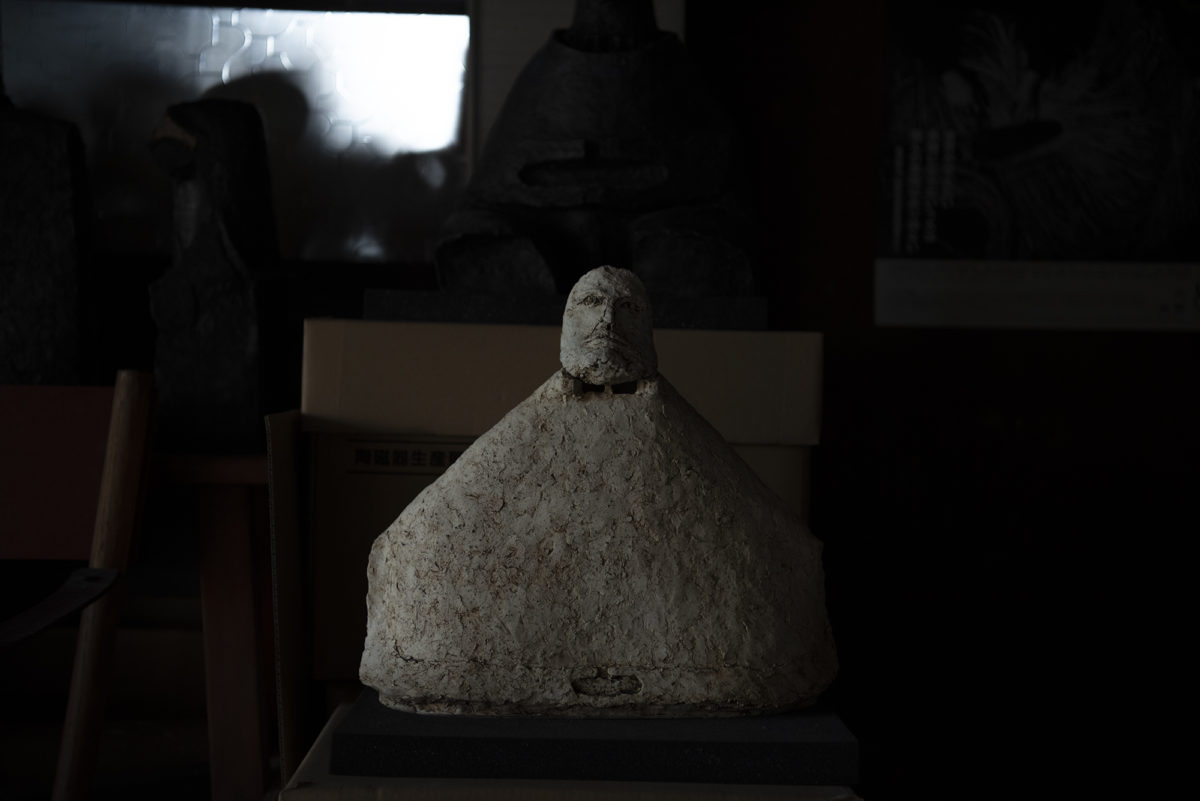
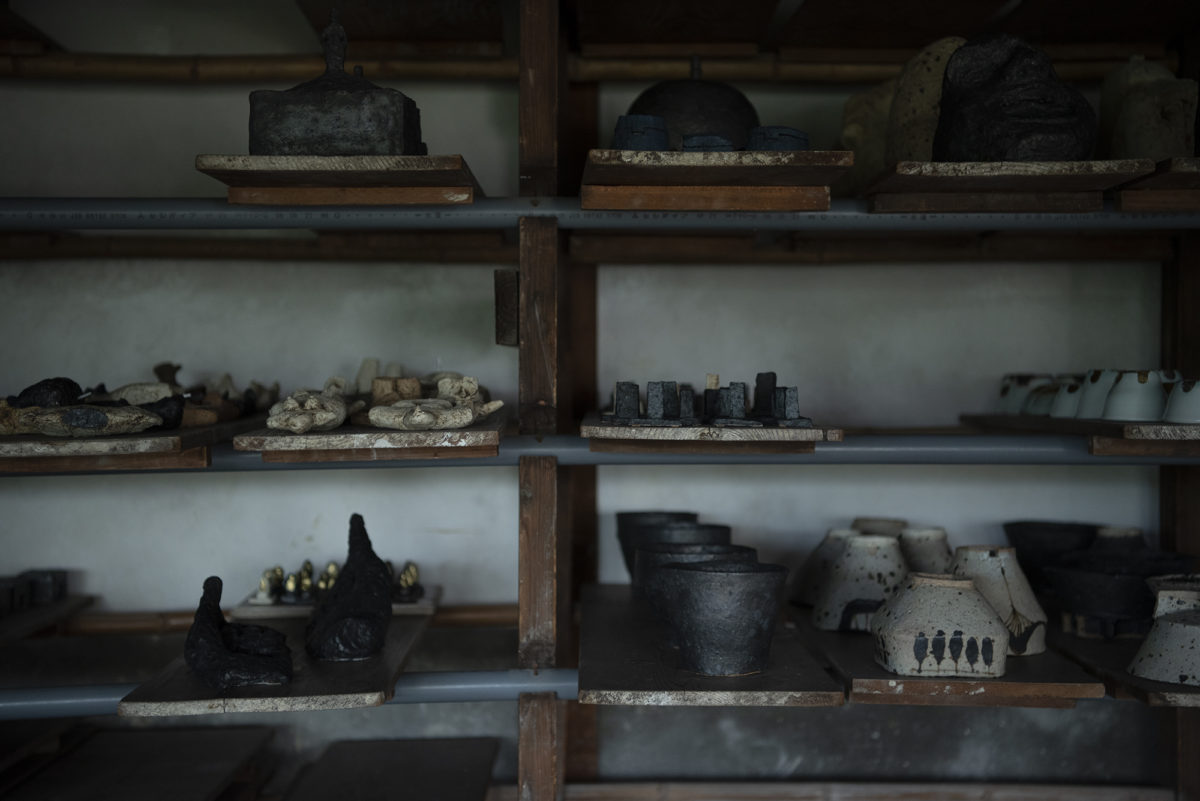
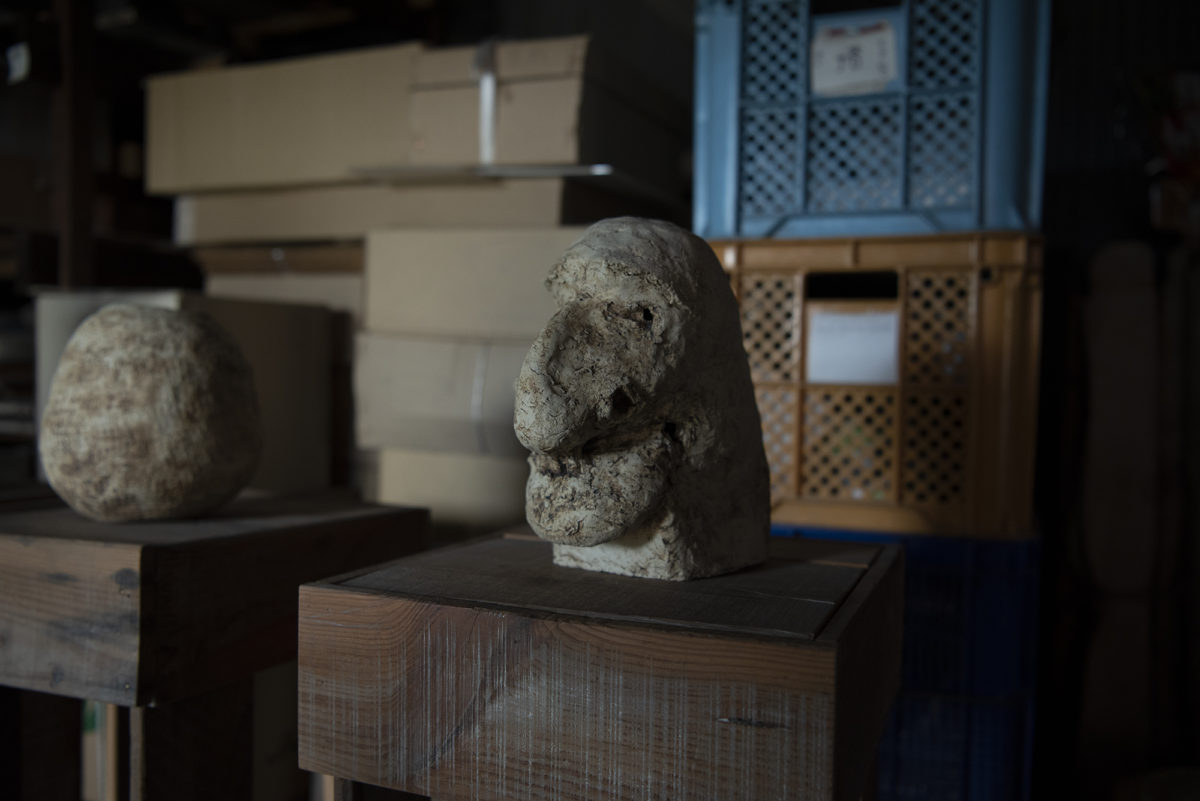
Akimoto: So, what determines the form of your work? There are many divergent schools of traditional Japanese craft. Do you pull from any of those?
Ito: Not at all. It’s more like my own feeling. Of course, I may still have in me the classics as I studied them. For example the shape of Jomon-era earthenware may be inspiring me.
Akimoto: That’ll make for something quite archaic. By the way, you include a number of motifs in your work, including human faces and forms, but I feel they are all connected somehow. Are you working toward a particular theme?
Ito: I actually don’t know which way I’m headed. I’m just branching out all over the place. However, I don’t really like abstracts. I need the sense of something tangible.
Akimoto: You’re originally from here, Toki, and now you have your home and studio here as well. Do you have some particular passion for this area?
Ito: Is there some significance to my being here? You know, pottery underwent a major reform* in this area in the Azuchi-Momoyama period. I’m inclined to feel a little pride in sharing that spirit.
* Mino ware ceramics were a turning point for Japanese pottery. The style was developed in the Azuchi-Momoyama period (1568–1614) in the Mino Province of what is today part of Gifu Prefecture.
Akimoto: What’s the difference in working here as opposed to other places?
Ito: Well, if you were to ask me if I could do the same work in Shigaraki, for example, I don’t think I could.
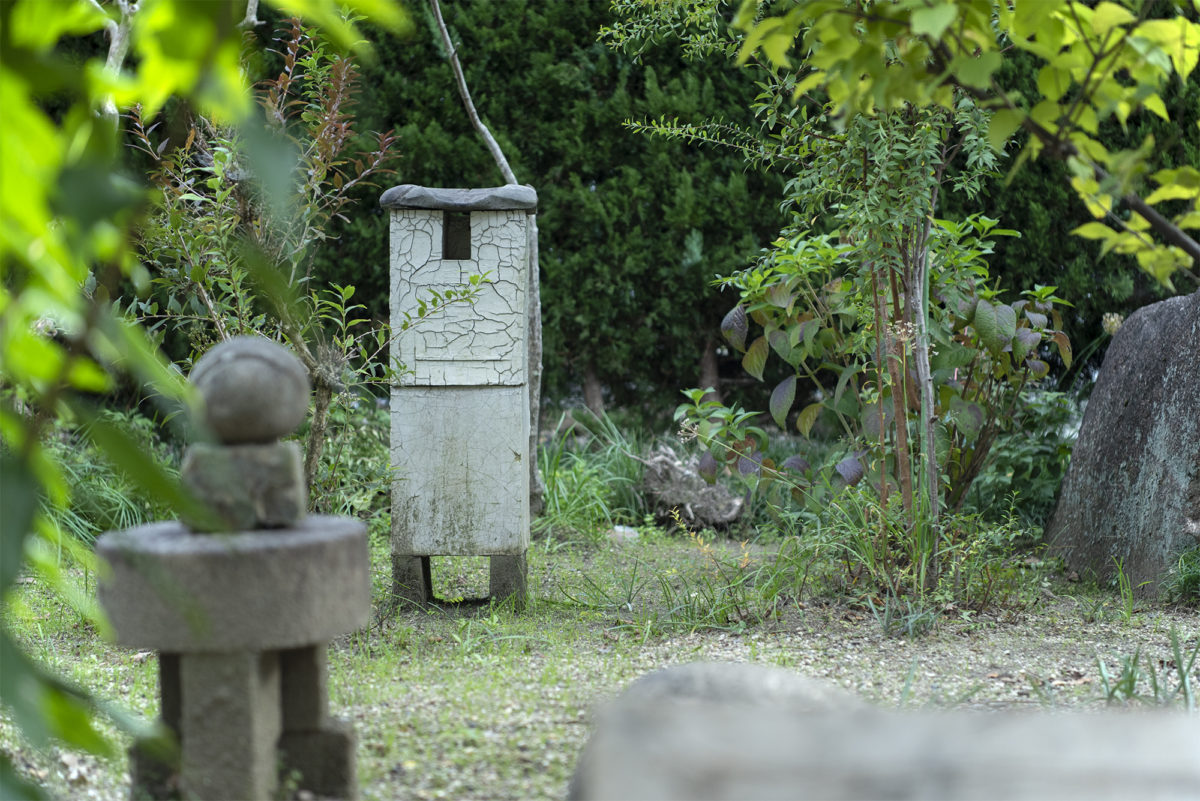
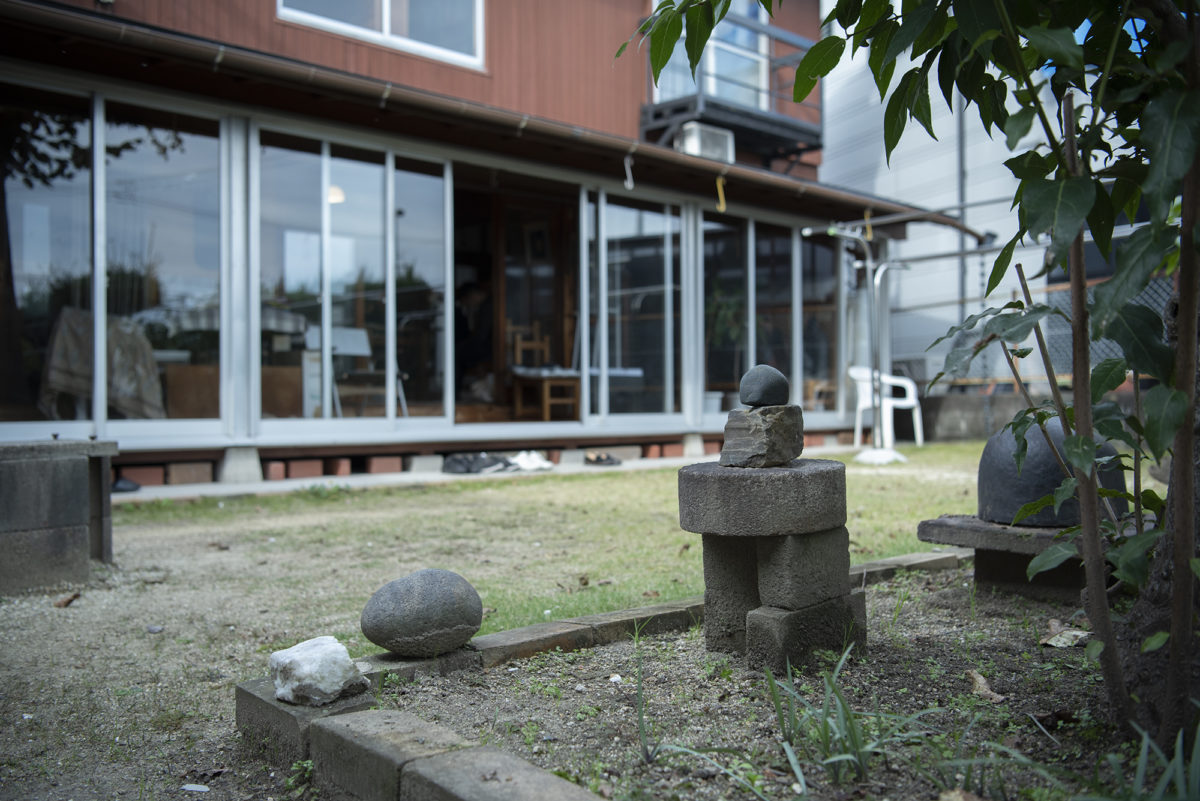
The garden at Ito’s home. The objet d’art gives a feeling of mystery.
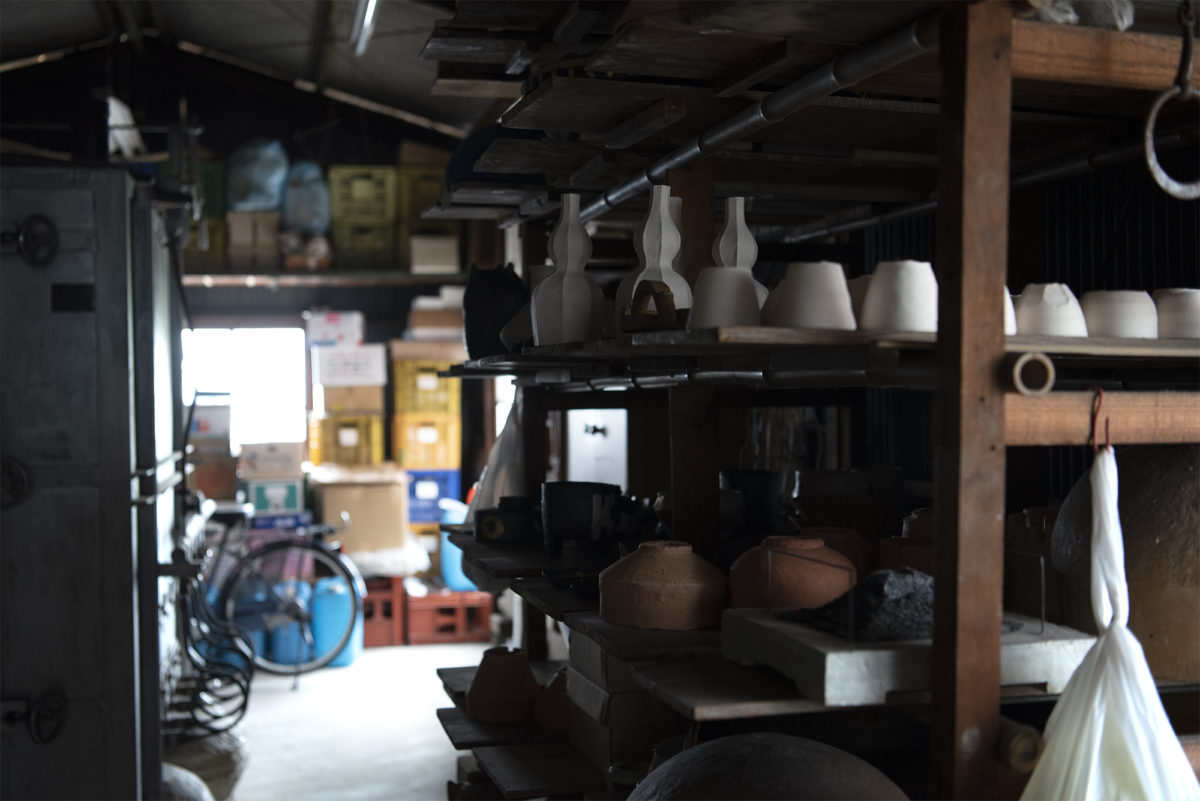
Akimoto: I’m surprised. I always imagined you with a more cosmopolitan attitude, but you seem well-rooted here. Was your choice of pottery as a profession a natural progression, then?
Ito: Yes. As a child, I grew up near the smoking chimneys of pottery kilns. How could I resist?
Akimoto: I didn’t expect to hear it was that kind of place! Well, today we’ve talked about a variety of things, but I have the impression that you don’t often discuss these things methodically, that you take a more natural approach.
It’s strange for me, and I don’t know how you’re able to do it. Most people try to be analytical and always have some clear “answer.” In that way, it can be a little difficult for someone like me to write about someone like you, an artist who defies revitalisation. [Laughter.]
Ito: Sorry to be so elusive. [Laughter.]
Akimoto: Don’t be! It’s precisely why I’m intrigued. Thank you so much for sharing your time.

PROFILE
Keiji Ito
Born in Toki, Gifu Prefecture, in 1935. Graduated from Musashino Art School (now Musashino Art University). He began working in the design office of the Gifu Prefectural Ceramics Research Institute in 1965, and later, at the same location, studied under Sakuzo Hineno. He has also worked as an adjunct lecturer at the Tajimishi Tojikiisho Research Institute (until 2000) and the Ishikawa Prefectural Kutani Ware Academy (presently).
Wakana Yanagida (author of the original Japanese article)(Writer, ENN co., ltd.)
Born in Kurobe City, Toyama Prefecture in 1988. She graduated from the University of Toyama Faculty of Art and Design’s Cultural Management Course. After working as an editor for a local magazine, she now manages the local media magazine, “real local金沢” through ENN and Kanazawa R Real Estate co., ltd.


